
Desert Ironwood
Photographed in La Quinta Cove on September 28, 2026, this tree’s gray-green paired leaflets and substantial gray branches point to desert ironwood (Olneya tesota). This is a photo-based identification; flowers or seed...
- In this guide
- Native
- Explore the collection
- Desert flora guide
A closer look.
Open a photograph to see the details. Use the arrows or swipe to explore the gallery.

Photographs from Desert Oasis Insider’s plant collection. Locations are shown where recorded in the original gallery.
Get to know this plant.
About this classification: Native
Native to the California desert region or nearby mountains. The setting listed above matters: a mountain native may not belong to the hot valley floor.
Photographed in La Quinta Cove on September 28, 2026, this tree’s gray-green paired leaflets and substantial gray branches point to desert ironwood (Olneya tesota). This is a photo-based identification; flowers or seed pods would help confirm it.
Field marks
- Foliage: Small oval, gray-green leaflets arranged in pairs on compound leaves.
- Branches: A dense, often irregular crown above woody gray bark; short spines may appear near the leaves.
- Flowers and fruit: Pea-like blooms in pink to lavender shades can appear in spring, followed by seed pods. Flowering varies from year to year.
Where to look
Desert ironwood is a Sonoran Desert native associated with desert washes and well-drained slopes. In the Cove, look for the contrast between its muted foliage and the brighter green stems of nearby palo verdes. The two photos here show the leaf detail and the branching, multi-trunk form of the same likely species.
Why it matters
Its canopy offers shade and shelter to other desert plants and wildlife. Ironwood can act as a “nurse plant,” creating a more protected spot where young plants establish.
Ironwood or palo verde?
Palo verdes are recognizable by their green, photosynthetic bark. Ironwood has a more woody gray trunk and blue-gray to gray-green foliage. For a firm field identification, check the leaves, bark, flowers, and pods together.
Quick questions
Is desert ironwood native here?
Yes. Olneya tesota is native to California’s Sonoran Desert region, including Riverside County.
Does it bloom every spring?
Not necessarily. Bloom can be sparse or absent in some years, so the lack of flowers alone does not rule it out.
What would confirm these photos?
A clear view of the paired leaflets, any short spines, flowers, and mature seed pods would strengthen the identification.
Sources
More native plants to know.
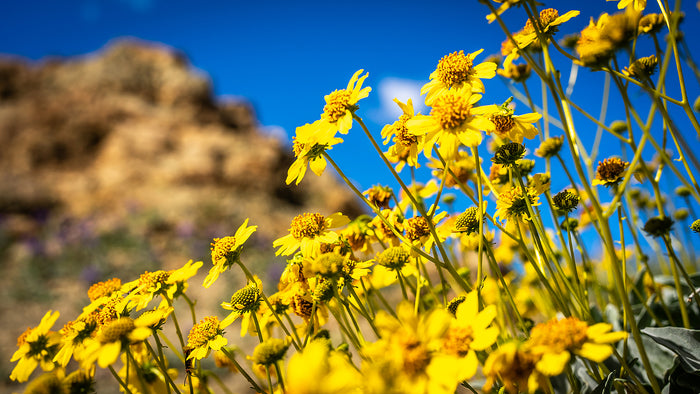
Brittlebush
Silver leaves and bright yellow flowers make this a familiar desert shrub.
Meet this plant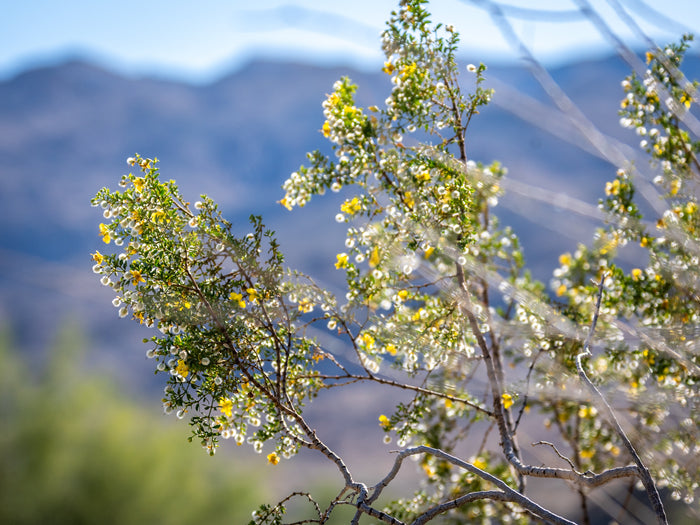
Creosote Bush
Small resinous leaves and yellow flowers belong to one of the desert’s defining shrubs.
Meet this plant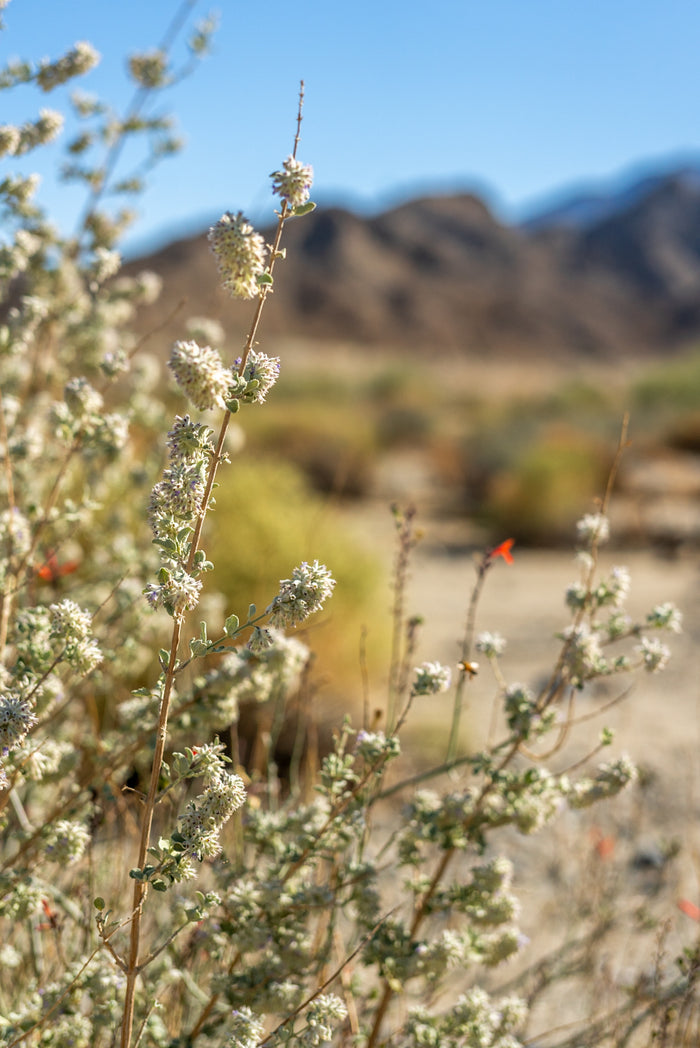
Desert Lavender
Pale purple flowers and soft gray foliage distinguish this aromatic desert shrub.
Meet this plantFollow the story outside.
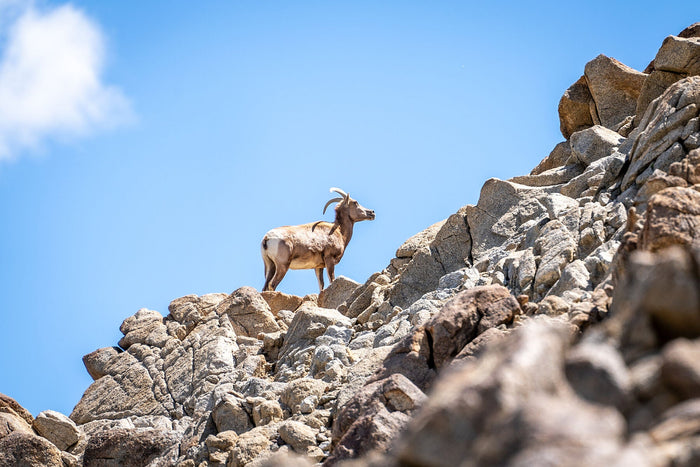
Bighorn Sheep of the Coachella Valley
Discover the bighorn sheep that share this landscape and the desert plants connected to their lives.
Read the story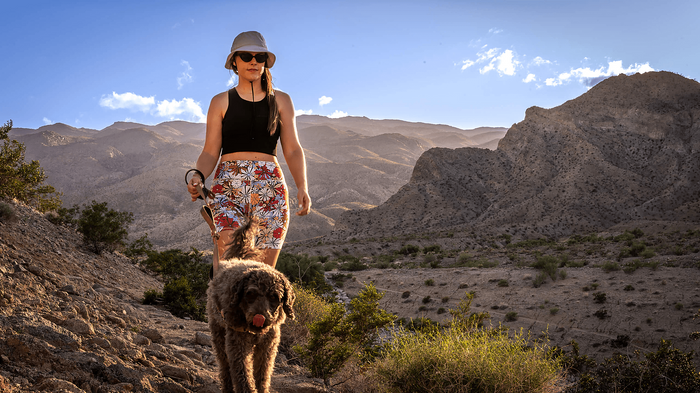
La Quinta Cove Hiking Trails: Three Routes and What to Know Before You Go
Take the plant guide into the landscape with a closer look at the trails around La Quinta Cove.
Read the story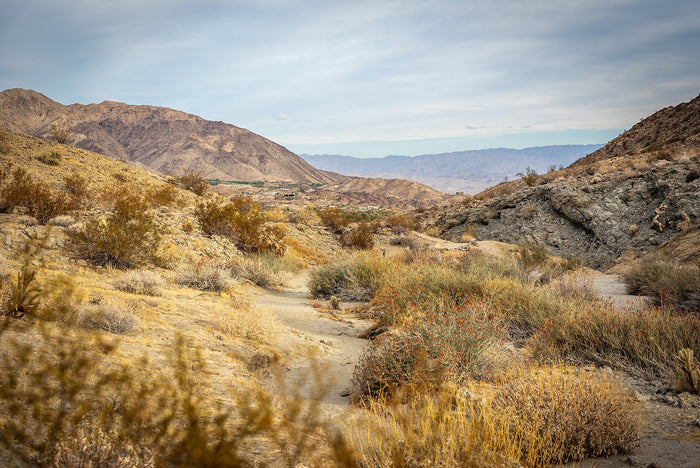
Hiking in Palm Desert: Trails, Views & Safety Guide
Continue exploring Palm Desert’s trails, open views and the outdoor spaces just beyond town.
Read the story