Bighorn Sheep
Ovis canadensis · Mammal
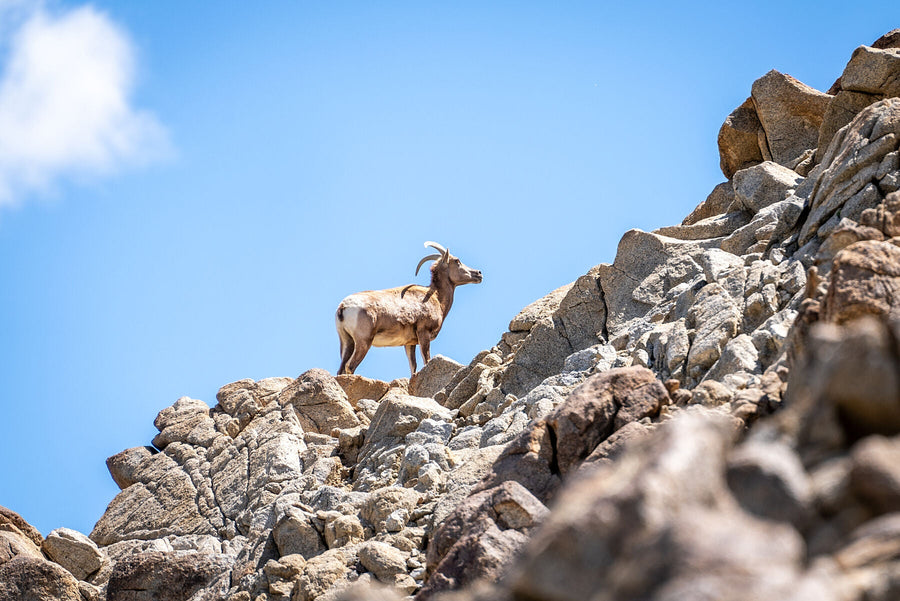
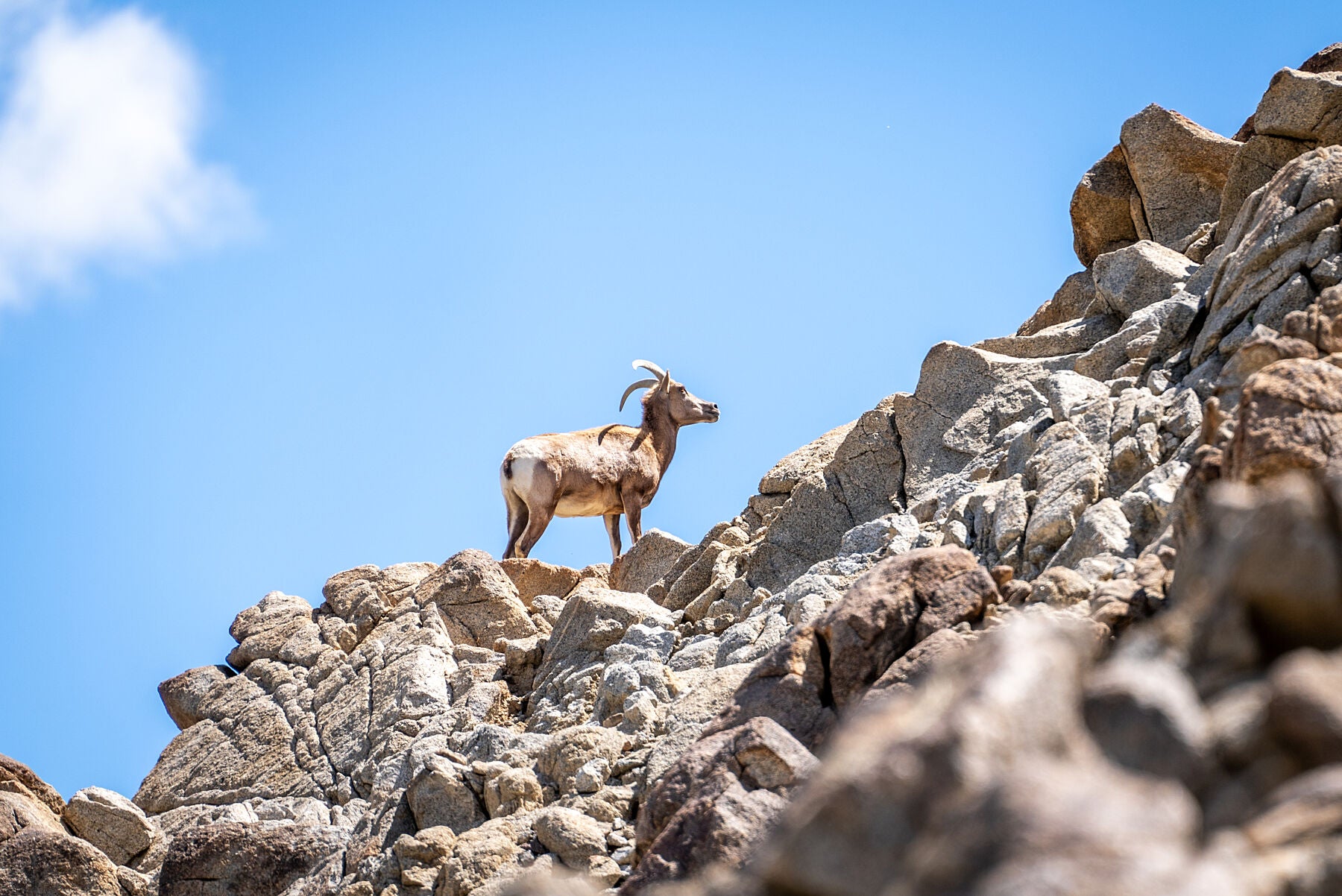
A white rump and curved horns stand out against the rock. Rams carry the largest, deeply curled horns.
One animal. Different perspectives.
Open a photograph to see the full frame. Use the arrows to move between images.



The details behind the discovery.
One of the most iconic large mammals of the Coachella Valley and surrounding ranges, including the Santa Rosa and San Jacinto Mountains. This subspecies of bighorn sheep is uniquely adapted to the harsh desert environment and plays a critical ecological and cultural role in the region.
Appearance
-
Size: Males (rams) weigh up to 200 lbs; females (ewes) are smaller, averaging around 125 lbs.
-
Horns: Rams possess massive, curled horns used in dominance battles; ewes have shorter, more slender horns.
-
Coloration: Sandy brown with a lighter belly and a distinctive white rump patch; this coloration provides excellent camouflage in rocky desert terrain.
Behavior and Ecology
-
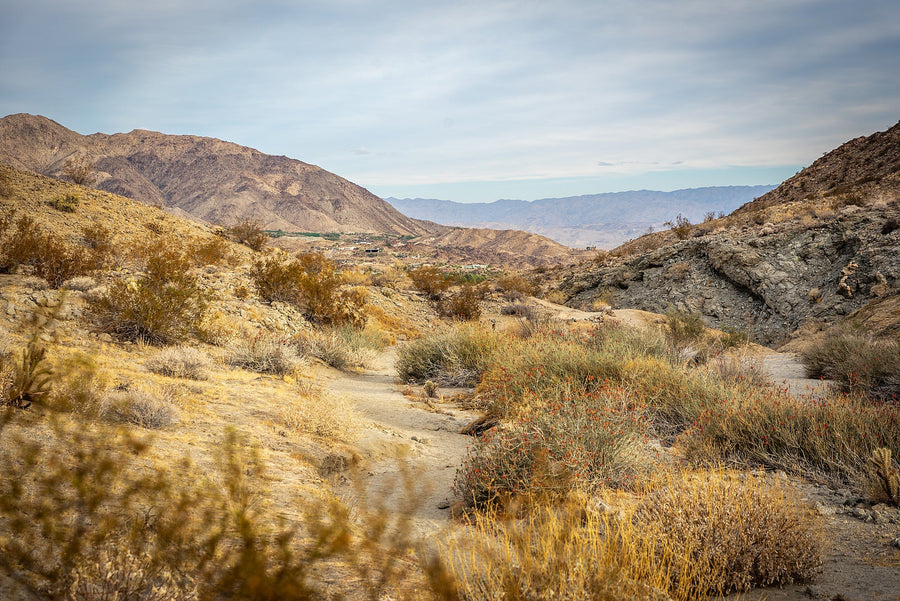
Habitat: Prefers rugged, rocky slopes and cliffs in desert mountains, which offer escape from predators and panoramic views.
-
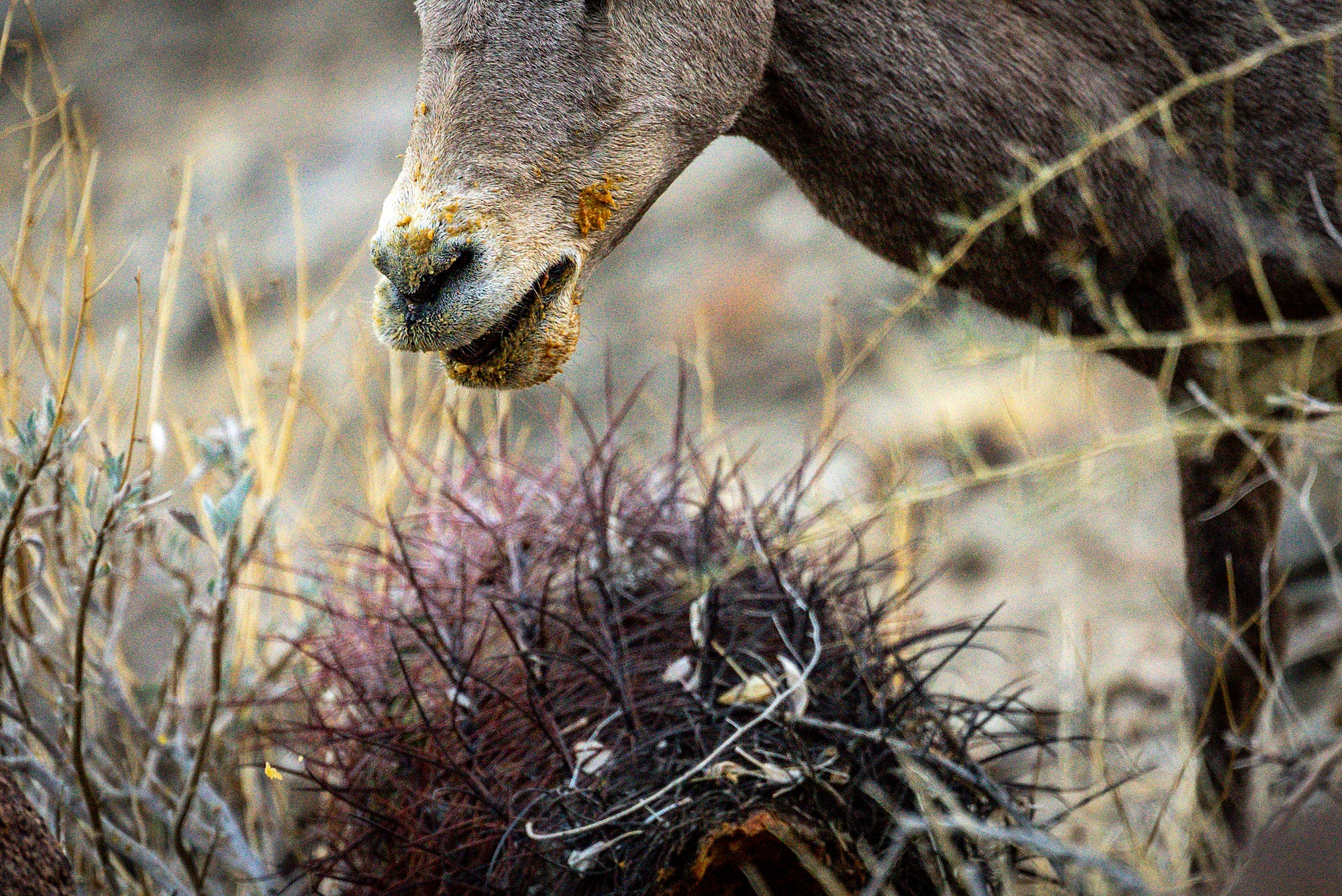
Diet: Primarily browsers, feeding on desert shrubs, grasses, and cacti. They obtain moisture from succulent plants but drink at water sources when available.
-
Social Structure: Lives in sex-segregated groups; rams and ewes form separate herds outside of the breeding season (rut).
-
Breeding: The rut occurs from July to October. Rams clash horns to establish dominance and breeding rights. Lambs are born in spring after a gestation of about 6 months.
Adaptations
-
Physiological: Can survive high temperatures and dehydration; kidneys concentrate urine efficiently to conserve water.
-
Locomotion: Exceptional climbers with specialized hooves that grip rocky surfaces, allowing them to navigate steep and uneven terrain effortlessly.
-
Vision: Excellent eyesight for detecting predators and navigating cliffs.
Ecological Role
Desert Bighorn Sheep help shape the desert plant community through selective browsing. They are prey for mountain lions and potentially influence predator movement and distribution. Their movements also aid in seed dispersal and nutrient cycling.
Conservation Status
Listed as a federally endangered population in the Peninsular Ranges, the Desert Bighorn Sheep has been the focus of extensive conservation efforts, including habitat protection, wildlife corridors, and monitoring. Key threats include:
-
Habitat fragmentation due to development and highways.
-
Disease transmission from domestic livestock.
-
Climate change and prolonged droughts.
Cultural Significance
Bighorn sheep hold deep cultural value for Indigenous peoples of the region, including the Cahuilla, who view them as symbols of strength and resilience. Petroglyphs and oral traditions frequently depict bighorn sheep.