































Golf-Course Home vs. Interior Lot: Is the View Worth It?
The open view, the quieter yard, and the tradeoffs that matter after you move in.

A golf-course home can offer one of the desert’s most memorable settings: open ground beyond the patio, mountain views and room for your eyes to travel. An interior lot can offer something just as valuable—a backyard that feels quiet, sheltered and yours.
After photographing homes across the Coachella Valley and then helping buyers choose between them, I see this as a decision about everyday life. The view matters. So do the people, equipment, light and neighboring homes around it.
- Golf frontage can create openness, but privacy depends on the exact path, playing area and elevation.
- Course maintenance and seasonal work are part of the setting.
- Interior lots often feel more enclosed and private, but surrounding yards and windows still matter.
- Compare similar homes within the same community before assigning a price to the view.
The view is more than a strip of green
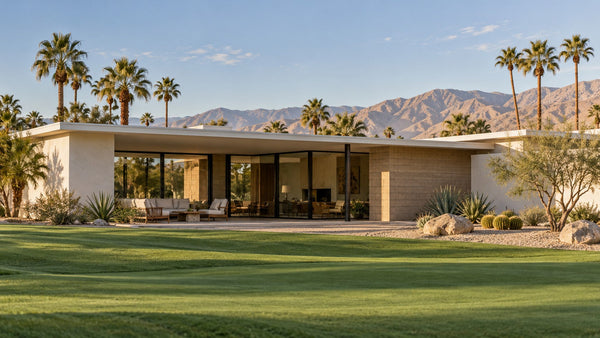
Before I became a full-time real estate agent, I worked as a real estate photographer. That gave me access to some of the Coachella Valley’s most beautiful homes and communities. One of the settings that stayed with me was a home sitting slightly above the golf course, looking across open ground toward the mountains.
At its best, the land seems to fall away from the backyard. The fairway creates breathing room, the mountains give the scene depth, and the house feels connected to something much larger than its lot. Sitting in the living room with a morning coffee, you can understand immediately why someone would pay for that setting.
I noticed that feeling especially in luxury communities, although it is not exclusive to them. Nor does every expensive golf-course home deliver it. Elevation, the width of the view, nearby roofs and the position of the cart path all change the experience.
The best version of golf-course living can be extraordinary. The question is whether the particular home delivers that version—and whether you enjoy everything that comes with it.
Golf frontage and interior lots: the everyday tradeoff
Golf-course frontage
- What you may gain
- Longer sightlines, visual depth, mountain views and less building immediately behind the yard.
- What you may give up
- Control over nearby activity, freedom to enclose the view, and some privacy from players and maintenance crews.
- The important detail
- The location of the path, tees, greens and neighboring patios—not simply the word “golf.”
An interior lot
- What you may gain
- A more enclosed outdoor room, fewer people passing the rear boundary, and often an easier setting for pets.
- What you may give up
- Open distance and an uninterrupted mountain view, depending on surrounding homes and trees.
- The important detail
- How many yards overlook yours, the separation between them, and how the house and walls affect light.
Neither description is a guarantee. A well-positioned interior lot can have a lovely mountain outlook. A golf-course lot can face close neighbors across a narrow stretch of turf. Compare the actual spaces you would use.
Look from your chair, then look back toward it
An elevated backyard can improve the sense of openness and change the angle at which people on the course see the home. But elevation alone does not establish privacy. A path may climb toward the patio, or a teeing area may sit nearly level with the pool.
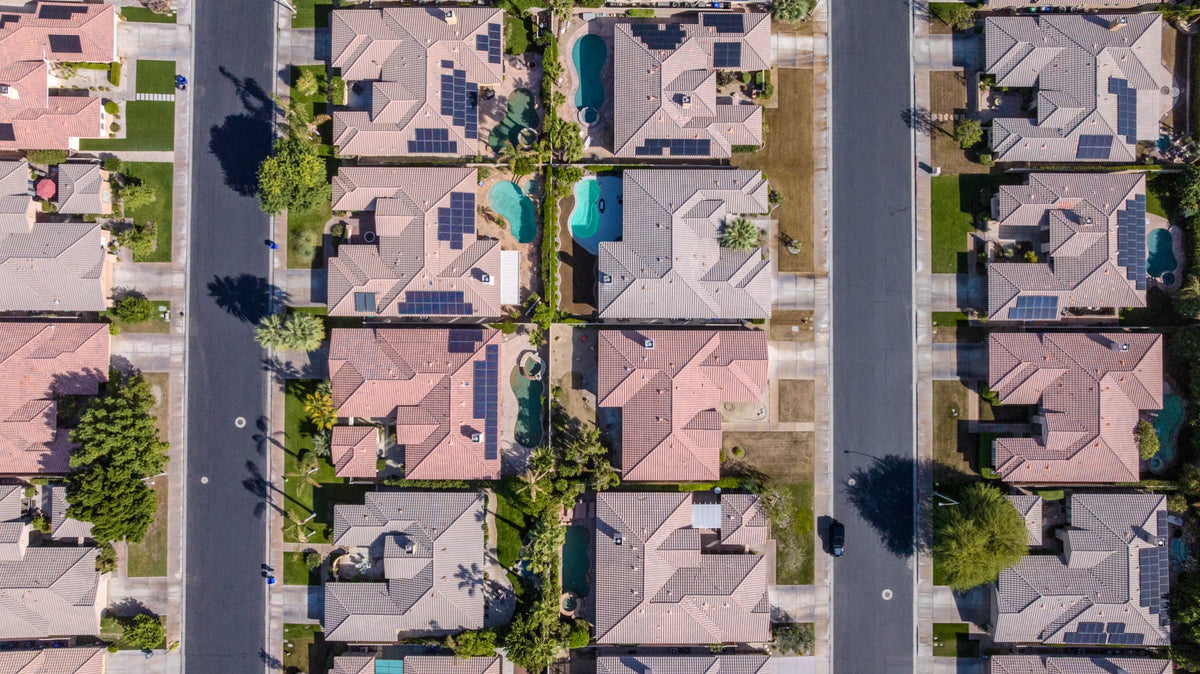
Start in the living room and at the outdoor table. What is visible when you sit down? A panoramic drone photograph can explain the surroundings, but it cannot stand in for that eye-level view.
Then consider the reverse sightline: from the cart path or other permitted viewing area, how much of the pool, patio and interior is visible? An open rear wall that frames the mountains for you can also frame your outdoor life for people passing by.
My guide to what makes a mountain view goes deeper into the foreground, rooflines and viewing angles that shape the scene.

The beautiful course is also a working landscape
That carefully maintained fairway does not stay that way on its own. Mowing, grooming, irrigation and other work are part of living beside a golf course. USGA guidance explains why crews start early and why some work continues while golfers are playing.
This is one of the biggest tradeoffs I discuss with buyers. The lawnmower may be beyond your property line, but the sound can still be part of your morning. The relevant question is how the actual maintenance route relates to your bedroom, patio and routine.
Seasonal work deserves attention too. Where a course overseeds for winter, preparations and establishment change its appearance and activity. The view you see in peak season is not necessarily the view during transition. Ask about the current course program and timing rather than assuming every club follows the same calendar.
Visit when the home is likely to be used, and arrange an early-morning observation when practical. A quiet afternoon showing tells you about that afternoon. It does not tell you what wakes you up.
Privacy depends on where people stop
A cart passing in the distance feels different from a group waiting beside your patio. Near a tee, green or gathering point, people may pause, talk and spend time much closer to the house than a listing photograph suggests.
Sometimes the intrusion is less about someone deliberately looking in and more about the ordinary proximity of strangers. You can hear their conversations. If someone nearby is smoking and the breeze carries it toward the patio, that may become part of the experience too.
Some owners enjoy watching golf and having activity outside. Others want to swim, read or sit quietly without feeling observed. I have seen even very high-end homes where the path and backyard alignment make that tension obvious.
Landscaping may soften a sightline, but ask what you would lose. If making the yard comfortable requires screening out the very view you paid for, an interior lot deserves a serious look. Verify any proposed hedge, wall, fence or screen against the property’s rules before relying on it as the solution.
An interior lot can give you a different kind of luxury
There is something valuable about closing the gate and having an outdoor space that feels like your own. Without golfers and course equipment passing the rear boundary, an interior yard can feel calmer and less exposed.
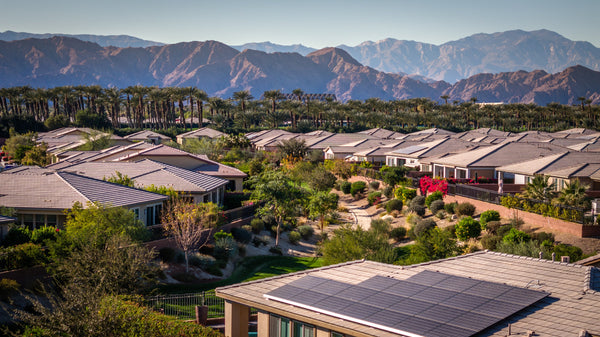
That does not make every interior lot private. Some backyards meet several others along the rear and side boundaries. Raised patios, nearby windows, active neighbors and pool equipment can change the atmosphere. A larger lot with more separation is a different proposition from a shallow yard closely surrounded by homes.
Walls and greenery can make a yard feel lush and sheltered. I often see buyers respond to that sense of enclosure. But mature planting also takes room, water and upkeep, and height or species choices may need approval. A tall hedge is not a universal fix for every boundary.
Pay attention to daylight as well. Nearby buildings and trees can block part of the sky or shade the yard at a time you want sun. The same enclosure that feels cozy to one buyer may feel cramped to another.
For a dog, the boundary can matter more than the view
A dog does not necessarily experience a golf-course view the way its owner does. Carts, people and birds can create a steady stream of things to watch or bark at. I have had clients whose Labradors were particularly interested in chasing ducks toward the lake.
A securely enclosed yard often makes daily life easier, although it cannot eliminate barking or every escape risk. On a golf-course lot, establish exactly how the dog would be contained and whether the permitted boundary treatment will work. The fairway and lake are not an extension of your pet’s yard.
A small area of real grass can also be a meaningful quality-of-life feature. In my experience, it gives a dog a place to rest or play without requiring a huge lawn. Veterinary guidance notes that grass is generally cooler than concrete and asphalt; artificial turf can also get dangerously hot in direct sun.
Grass does not make midday desert heat safe. Shade, water, supervision and suitable outing times still matter. When comparing homes, look for a usable, secure space for the dog—not just an attractive patch of green in the photograph.
Two details the view can distract you from
Sun exposure. A dramatic mountain outlook may face strong late-day sun. Look at patio cover, glass, shade and when you actually plan to sit outside. The backyard exposure guide helps separate the direction from the way the specific home manages it.
Errant golf balls. Exposure varies by location and play. Ask about the seller’s experience, inspect relevant surfaces and review disclosures. Neither a wide buffer nor an absence of visible damage proves that a property never receives a ball. My Shadow Hills golf-course guide explains the property-level questions and that community’s documents in more detail.
Is the golf-course premium worth it?
First establish whether the homes being compared are meaningfully similar. A larger, renovated golf-front home with a pool cannot tell you what the view alone is worth compared with a smaller interior home that needs work.
I start within the same community, then narrow by floor plan, size, condition, pool, lot and sale timing. The precise frontage matters too: a broad, elevated outlook is different from a yard immediately beside a busy path. Even a useful set of comparable sales rarely reduces the whole decision to one universal percentage.
The shared market data behind the cards below provides community context. It does not give this article a sufficiently reliable golf-front-versus-interior classification to publish a measured view premium. I would rather compare the actual candidates with you than turn mixed medians into a misleading number.
A higher price can make sense when you will enjoy the view every day and are comfortable with the activity. Paying less for a private interior yard can make just as much sense when quiet outdoor time is what you value most.
Explore the setting, then compare individual lots
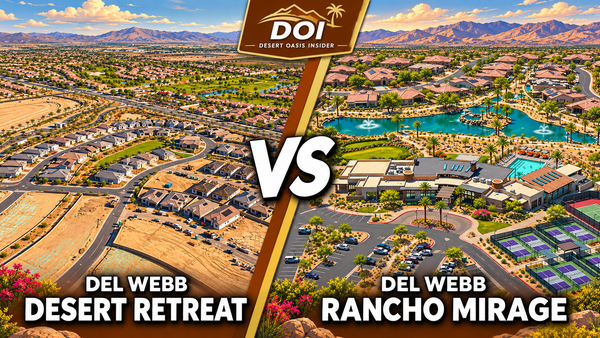
Trilogy La Quinta and Sun City Shadow Hills offer useful starting points for comparing different lot positions within a community. Whitehawk is an example of an interior-neighborhood alternative. These cards show overall community information; comparing their prices does not isolate the value of golf frontage.
3 communities
Home prices use recent closed sales in the matched MLS area. HOA and club amounts retain the qualifications in the shared community records.
 La Quinta
Buying guide
Trilogy La Quinta
Established 55+ living in south La Quinta, with two resident clubhouses and separately priced public golf. Compare floor-plan options, casitas and lot orientation; review reserve contributions and the property's balance from earlier assessments.
- Home price
- Loading prices…
- HOA
- Est. $622/mo
- Club / social
- Included in HOA
- Golf
- Optional annual resident golf: Premier $3,650/person (Mon–Thu); Plus $6,250/person; $30/round before 2pm + club-cart fees
What to compare here
HomesCompare actual plan, elevation, rear boundary, cart-path distance and the view from the patio.
MembershipUse current property-specific association and club documents; the lot’s setting does not establish membership rights.
Ask before buyingA community median does not establish a golf-front premium.
 Indio
Buying guide
Sun City Shadow Hills
An established Del Webb 55+ community with two recreation hubs and golf available without mandatory golf membership. Compare the three phases, floor plan and lot position; green fees are separate from the community assessment.
- Home price
- Loading prices…
- HOA
- Est. $398/mo
- Club / social
- Included in HOA; tenants need assigned privileges
- Golf
- Separately priced; owner discounts suspended during rental
- One-time
- Example transfer $350 + resident processing $50; confirm current closing demand
What to compare here
HomesCompare the precise course relationship, interior-yard separation and the home’s disclosures.
MembershipUse current property-specific association and club documents; the lot’s setting does not establish membership rights.
Ask before buyingReview the property-specific setting alongside the Shadow Hills golf-course guide.
 Palm Desert
Buying guide
Whitehawk
A gated, non-golf Palm Desert neighborhood for buyers prioritizing private-home space and outdoor living. Evaluate the home's pool, yard and major systems separately from HOA dues; shared grounds do not eliminate individual maintenance.
- Home price
- Loading prices…
- HOA
- Est. $175–$210/mo
What to compare here
HomesLook at neighboring yards, walls, landscaping, lot depth and privacy from windows.
MembershipUse current property-specific association and club documents; the lot’s setting does not establish membership rights.
Ask before buyingThis is a separate community, not a control group for valuing a golf view.
Open the full Community Explorer
Your community comparison
Let’s compare the backyard you will actually use
Tell me whether you picture morning coffee with an open view, quiet afternoons by the pool, or a secure yard for the dog. We can compare specific homes around that routine, using aerial photographs to understand the layout and a visit to judge the experience at ground level.
The goal is not to talk you into or out of a golf-course home. It is to find the combination of view, privacy and daily comfort that you will still appreciate after the first impression wears off.
Golf-course and interior-lot questions
Are golf-course homes always more private than interior lots?
No. Open ground can remove a close rear neighbor, but a cart path or tee may expose the yard to passing people. Interior lots can feel more private, although neighboring windows and patios still need to be assessed.
Are all golf-course homes affected equally by maintenance noise?
No. The location, maintenance route, terrain and home construction change what you hear. Ask about the current routine and observe the property at a relevant time when practical.
How much more is a golf-course lot worth?
There is no universal premium. Compare similar closed sales within the same community, accounting for the floor plan, condition, pool, lot, view and timing. This article’s community medians do not isolate golf frontage.
Is an interior lot better for a dog?
A secure enclosed yard can make containment and reduced visual stimulation easier. The individual dog, boundary and neighboring activity still matter. On a golf-course lot, verify what fencing is permitted and do not treat the course as a pet exercise area.
Does a golf-course home include golf membership?
Not necessarily. Owning a home beside a course and holding playing privileges are separate questions. Review the specific community and club arrangements before buying.
Sources, photography and market scope
Prepared November 8, 2026. The photography background, buyer observations and Labrador example are Mark Miller’s firsthand account. Photographs show representative settings in different communities; they are not matched sales or assurances about an individual lot.
- USGA: Why golfers see maintenance on the course — early starts and work during play.
- USGA: Overseeding practices — seasonal turf preparation in desert climates. Practices and timing vary by course.
- American Animal Hospital Association: Protecting paws from hot surfaces — grass is generally cooler than pavement; artificial turf can become hot too.
- Community cards draw from the shared Community Explorer and housing-market records. Overall community prices do not measure a golf-front premium. No matched-lot price analysis is presented.